Researchers at Kyutai shrank a slow talking-head video model into one that keeps pace with speech. The smaller version runs faster than real time on a single GPU. The work is a preprint and has not been peer reviewed.
A preprint finds that online AI services shrink or reject large photos before the model sees them. Cutting photos into tiles, or letting the model zoom, recovered much of the lost accuracy.
A small machine learning model learns weather forecasting and data blending straight from 18 kinds of instrument. Near the ground it beats the main US ensemble for up to 12 hours, but it trails operational systems higher up.
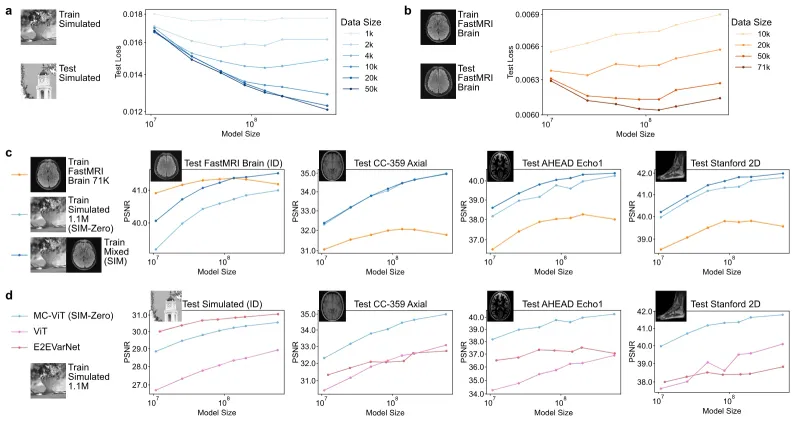
A preprint trains an MRI reconstruction model mostly on fake scanner data made from everyday photographs. On scans from other hospitals and machines, it beat methods trained on real patient scans.
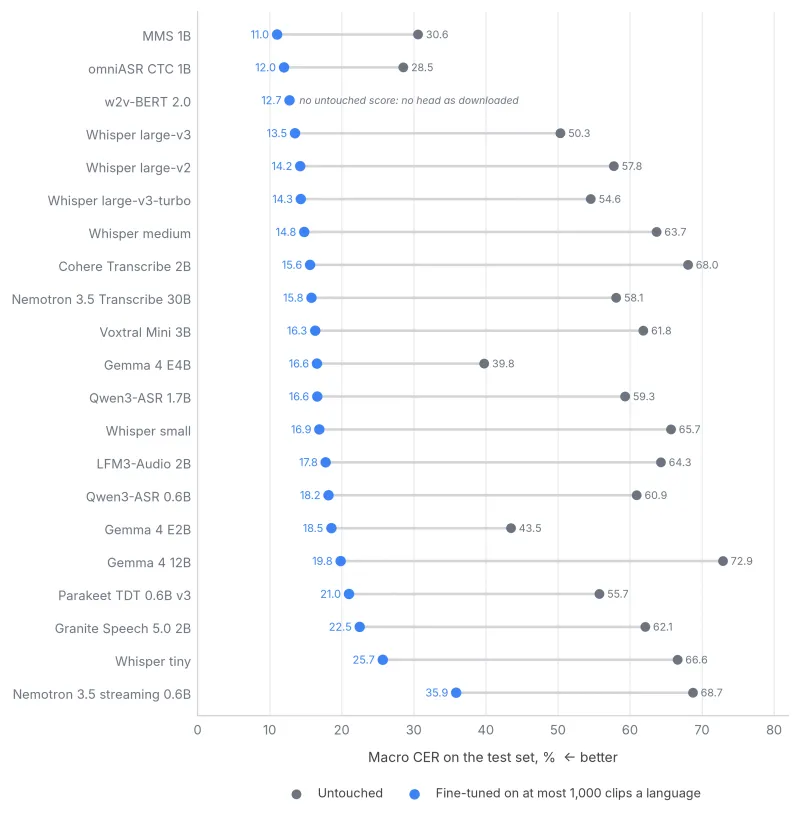
A large preprint fine-tunes 24 open speech recognisers on 50 low-resource languages. Every model improves sharply, but the output is still a draft that needs human correction.
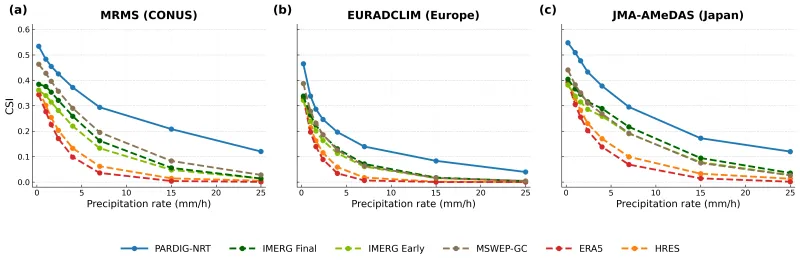
A Google DeepMind and Google Research model turns weather data and satellite images into rain maps every 15 minutes. In the authors' tests it beats the main existing products, most clearly in heavy rain. The paper is a preprint and has not been peer reviewed.
A preprint benchmark of 12 image-counting tasks finds that free, off-the-shelf vision-language models are a strong starting point for estimating totals with a small human-labelled sample. Letting the model pick which images people check usually helps further.
A single-author preprint retrains a small open streaming model so its median word appears about 90 ms before the speaker finishes it, each word tagged with a usable confidence. The cost is more words taken back, and it is less accurate than larger models.