NVIDIA robot model keeps long memory at constant speed, beating π0.5
A 4.5-billion-parameter robot model from NVIDIA and university partners remembers about a minute of a task without slowing down. It tops several simulation benchmarks and beats two open baselines on real robots. It is a preprint, and no code or weights are confirmed as released.
scienceunderway.com/articles/nvidia-robot-model-keeps-long-memory-at-constant-speed-beating-0-5

 AI illustration
What the study shows
The study comes from NVIDIA with researchers at UC San Diego, Tsinghua, MIT, the University of Hong Kong and Inco AI. It is a preprint and has not been peer reviewed. The model belongs to a family called world action models: robot controllers built on video generators, which predict what the camera will see next alongside the robot's next moves.
Such models are usually slow and forgetful. They either look only at the current camera image or keep a handful of old frames, and each extra frame adds delay. The authors' model mixes two kinds of layer. Most layers squeeze the whole history into a fixed-size summary, so their cost never grows. A quarter of the layers look in full detail at the first frame and the most recent stretch of video. The robot acts in chunks of 32 small moves, and each chunk costs the same however long the task has run.
On RoboDojo, a public simulation benchmark of 42 two-armed tasks, the official leaderboard puts the model first on average. Its lead is largest on tasks that need memory: about 52% success, against 34% for the next best model of its type. It also reports the top scores on three robustness tests built on the LIBERO benchmark, including 94% on LIBERO-Plus. It is not best everywhere. On following open-ended instructions it scores far below a large general model, GPT-6 Astra.
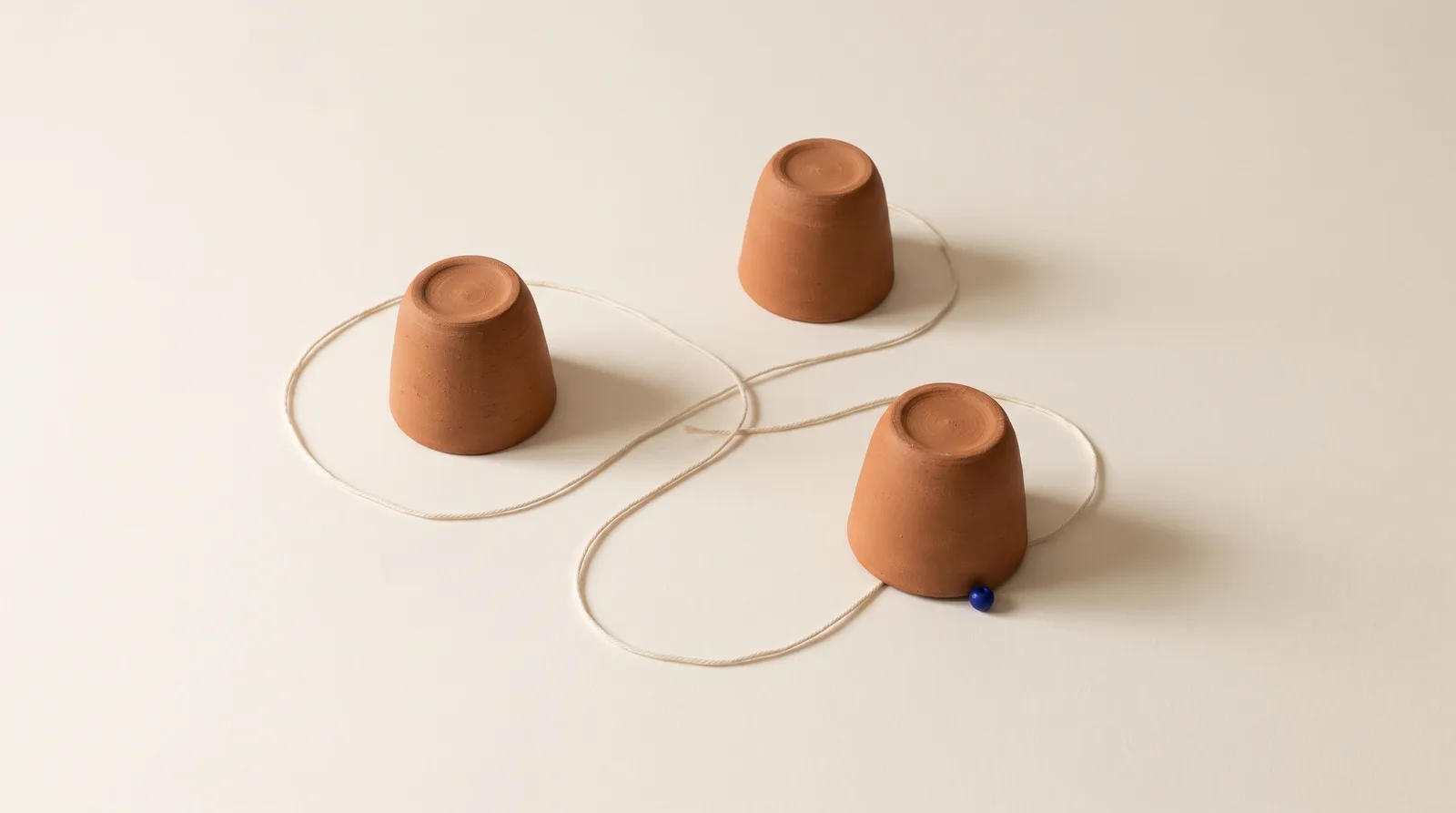
On real robots, each task got its own copy of the model, fine-tuned on 100 demonstrations. On a seven-ring Tower of Hanoi it stacked on average about 84% of rings before its first mistake. The open models π0.5 and OpenWAM-α managed about 45%. In a three-cup shell game, the version with memory found the ball in 75% of attempts. A version without memory scored 30%, no better than guessing.
Engineering work cut the time per decision about fivefold, to 115 milliseconds on an RTX 5090 graphics card when using 4-bit arithmetic. Combined with a scheme that plans the next chunk while the robot is still moving, this supported smooth control at 30 decisions per second. On a fast air hockey task, overlapping planning with motion raised hits from 45% to 60%.
Our reading
In our reading, the most useful result is not a single benchmark win. It is the evidence that a robot controller can carry a full-episode memory at a fixed price per step. Earlier designs kept a few snapshots and paid more for each one. Here the cost barely moves: widening the detailed window from one recent chunk to four added about 2.5 milliseconds.
The memory gain also looks real rather than incidental. In the authors' own comparison, the same base model reached about 49% on memory tasks with their design, against 28% and 31% with the memory schemes of two rival models. Removing parts of the memory made predictions several times worse. A concrete case: a robot that must count how often it has pressed each button succeeded in about 83% of episodes, against 3% with a rival's memory scheme.
The caveats are about scale and evidence. Real-robot results rest on 20 attempts per task, with no error bars. Gaps such as 75% against 70% on a cube-turning task are too small to read much into. Readiness is level II on our scale, Benchmarked: there are public benchmark results, but the paper links only a project page and confirms no released code or weights.
The rest of this story is for members. Membership is free: read it at scienceunderway.com/articles/nvidia-robot-model-keeps-long-memory-at-constant-speed-beating-0-5
Read the rest of this story
Membership is free. You get every article in full, and can save stories and follow topics.
We send a sign-in link, no password needed. Already a member? Sign inReadiness assessment
| Level | Status | Evidence |
|---|---|---|
| I Lab only | Met | A working 4.5B model with a described architecture, training recipe and real-robot demonstrations. |
| II Benchmarked | Met | Results on public benchmarks: RoboDojo (official leaderboard), RoboTwin 2.0, LIBERO-Plus/Pro/Max, WorldArena, with comparisons against many named baselines. |
| III Open source | Not yet | The paper links only a project page (https://nvlabs.github.io/Sana/Robot). It states no released code, weights or data. Not confirmed from the paper text. |
| IV In production | Not yet | No documented use by an outside organisation in production. Deployment was in the authors' own lab tasks. |
What would move it up
Releasing the code and weights (with data pipeline details) would reach level 3. For level 4, a named organisation would need to run it on real robots in daily work. Larger real-world trials with more rollouts and independent replication would also help.
The study
Yuyang Zhao, Zekai Li, Yicheng Pan et al.. SANA-Robot: Efficient World Action Model with Hybrid Memory. arXiv, 21 November 2026. Read the paper
Notes
- Zhao, Li, Pan et al., SANA-Robot: Efficient World Action Model with Hybrid Memory. arXiv preprint 2611.28943, November 2026. Not peer reviewed. Licence CC BY-NC-ND 4.0. Source
- Project page. The paper does not state that code or weights are released. Source
- RoboDojo official leaderboard figures: SANA-Robot-AR 34.31 average score and 27.09% average success; memory dimension 52.33% success against 34.00% (InternW0-Δ) and 38.67% (GPT-6 Astra); open-vocabulary 5.21 score against 34.36 (GPT-6 Astra).
- Latency per action chunk, three cameras, 4 denoising steps, RTX 5090: 607.8 ms eager, 173.3 ms optimised BF16, 135.1 ms FP8, 115.0 ms NVFP4. Jetson Thor: 1390.1, 420.2, 333.6, 288.0 ms.
- Real-world results (20 rollouts per task): Make Coffee 87.1% against 65.7% (OpenWAM-α) and 57.1% (π0.5); Tower of Hanoi 83.6% against 45.7% and 44.3%; Magic Cube 75% against 60% and 70%. Shell game 75% with memory, 30% without.
- Readiness: level II, Benchmarked. Public benchmark results are reported; no released code or weights are confirmed; no documented production use.
Edited and signed by
Stefan PerdalEditor and publisher142 stories editedStefan read the study, set the readiness level and approved this story. An AI system found the paper and wrote the first draft.
How this was made
An AI model read the study and wrote this article in the structure Science Underway uses. An editor reviewed it and approved it for publication. Check the original study before you rely on the details.
How we workNo corrections