Claude and GPT robot agents roughly halve success when the world keeps moving
A new simulated benchmark runs the same robot memory tasks twice, once with the world paused while the model thinks and once with it running. Scores that look near perfect fall sharply, and the ranking of models changes.
scienceunderway.com/articles/claude-and-gpt-robot-agents-roughly-halve-success-when-the-world-keeps-moving

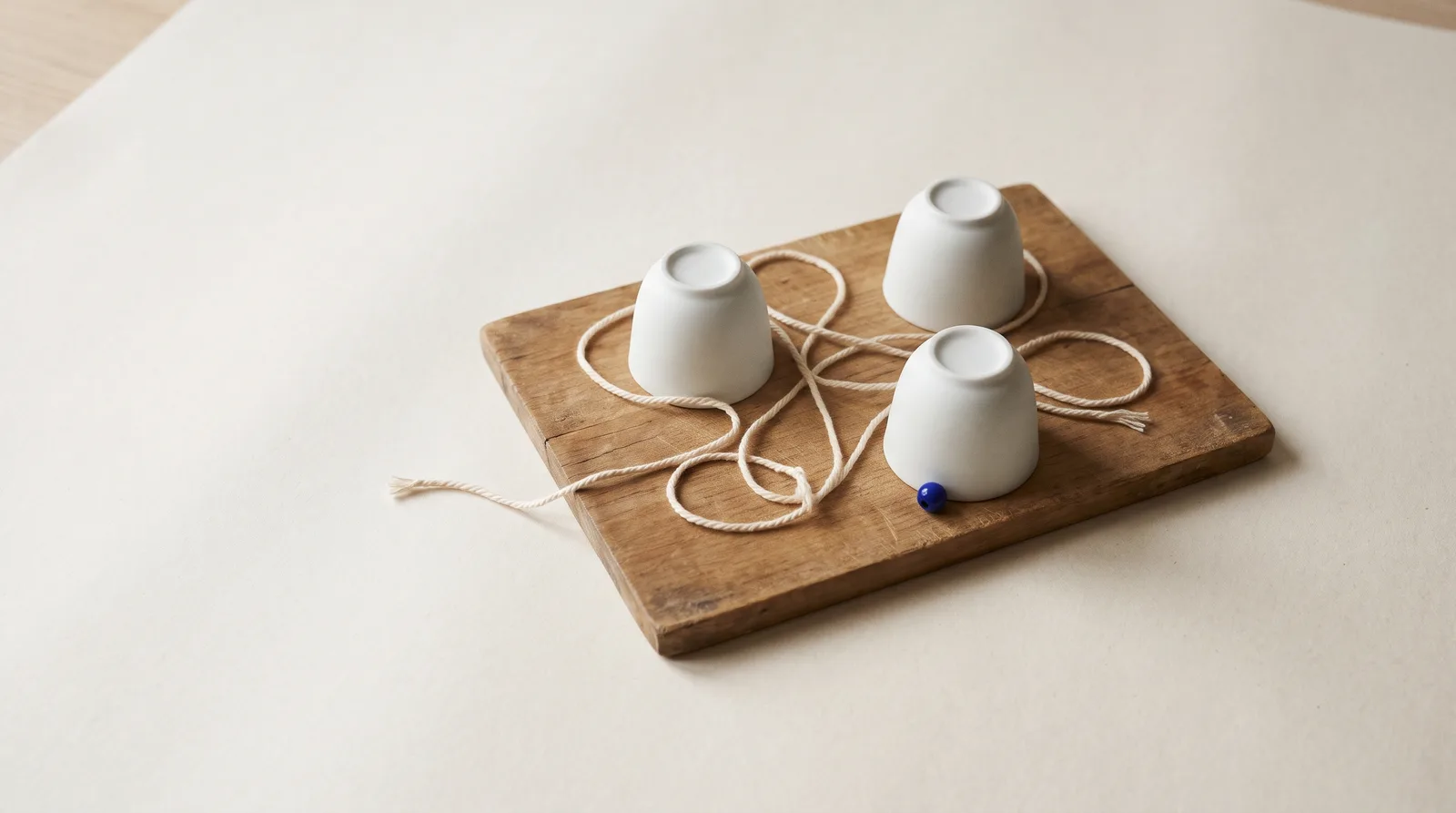 AI illustration
What the study shows
Robots that work around people need memory: which of three identical mugs holds Grandpa's medicine, or whether the soup is already salted. Several benchmarks test this, and agents built on vision-language models (AI models that read images and text) now score close to perfect on them. The authors point out that all those benchmarks pause the simulator while the model thinks. Nothing can change during a decision.
The team built RoboLiveMem, a benchmark with 29 task families in three tiers. The most realistic tier uses 16 home, workshop and restaurant scenes from BEHAVIOR-1K, an established robot simulator. The others use a MuJoCo kitchen and ManiSkill tasks. Every task runs under a paused clock and a live clock, where the world keeps running for as long as the model thinks. Some runs include a real change, some a harmless look-alike movement, and some no change at all, so no fixed strategy wins.
The authors tested 16 models from eight providers on 34,176 episodes. They report that, on realistic scenes where a remembered object changes, eight Claude and GPT models succeeded in 97% of episodes on average when paused and 50% when live. Claude Opus 5.5 never failed when paused but succeeded in about 44% of live episodes. When nothing changed, live success stayed at 92% or more, so the loss comes from the changes themselves.
Speed was not the main cause. The three slowest of those eight models were the three most robust. Even when charged only 2 seconds per decision, every model tested stayed at least 36 points below its paused score on swap tasks.
The authors traced most failures to timing. Models often decided on camera frames taken before a change had finished. Asked later about those same frames, the models usually described the change correctly. A simple 'commit check', which looks at the target once more before acting and re-decides if the view changed, lifted realistic live success to between 88% and 97% for the five models tested.
One problem remained. When identical objects were swapped several times in the controlled tasks, the commit check did not help enough. All nine models tested still did at least 12 points worse than when a visible tag showed which object was which. This is a preprint and has not been peer reviewed.
Our reading
In our reading, the main contribution is the test design rather than any single score. Running the same seeds under two clocks, plus a twin version where the change stays visible, lets the authors separate three causes of failure: being too slow, not looking at the right moment, and genuinely losing track. That separation is what makes the results useful to engineers.
The ranking reversal is the finding most worth remembering. Models that looked equal when paused ranged from about 8% to 86% live. Any team choosing a model for a robot based on paused memory benchmarks could pick the wrong one.
The practical message is encouraging for simple cases. In the realistic scenes, most of the gap came from a harness habit: observe, think, then act without looking again. A cheap pixel check before each action recovered most of it, with no training. Consider a care robot fetching a medication cup while a relative tidies the table. A last look before lifting could be the difference between the right cup and a look-alike.
The rest of this story is for members. Membership is free: read it at scienceunderway.com/articles/claude-and-gpt-robot-agents-roughly-halve-success-when-the-world-keeps-moving
Read the rest of this story
Membership is free. You get every article in full, and can save stories and follow topics.
We send a sign-in link, no password needed. Already a member? Sign inReadiness assessment
| Level | Status | Evidence |
|---|---|---|
| I Lab only | Met | A simulated benchmark and protocol are described and validated with scripted policies (privileged, stale, always-change) before any model is run. |
| II Benchmarked | Met | The paper reports results for 16 models on 34,176 episodes across three simulated tiers, with paired bootstrap intervals. It builds on public simulators (BEHAVIOR-1K, MuJoCo, ManiSkill). The benchmark is new and has no independent results yet. |
| III Open source | Not yet | The paper gives a project page and code link (https://RoboLiveMem.github.io), but we could not check what is released. The paper does not state a licence for code or data or confirm that task scenes are available. |
| IV In production | Not yet | No documented use in a deployed system or by a named organisation. This is a simulation benchmark. The commit check has only been tried in simulation. |
What would move it up
To reach level 3, confirm that code, scenes and evaluation scripts are public and runnable with a clear licence. To reach level 4, show the commit check or the benchmark in use by a named team on real robots or deployed agents, with results from real shared spaces. Independent replication by other groups would also help.
The study
Yunbei Zhang, Yuyou Zhang, Janet Wang et al.. RoboLiveMem: Is Robot Memory Solved When the World Does Not Wait?. arXiv, 23 November 2026. Read the paper
Notes
- Zhang, Zhang, Wang et al. RoboLiveMem: Is Robot Memory Solved When the World Does Not Wait? arXiv preprint 2611.30047, November 2026. Not peer reviewed. Source
- Project page and code link given by the authors. We have not checked what is released. Source
- Exact figures: realistic tier, eight Claude and GPT models, changing episodes, 97% paused against 50% live on average. Claude Opus 5.5 100.0% paused, 43.8% live. Claude Fable 5.1 93.8% paused, 85.9% live. GPT-6 Luna 95.3% paused, 7.8% live (Table 3).
- Commit check on 13 realistic scenes: Opus from 61.5% to 97.1%, Astra from 80.8% to 95.2% (Table 5). On controlled swap tasks the remaining memory gap with the check was 12.5 to 57.5 points (Table 11).
- The paper is licensed CC BY-NC-SA 4.0. Reusing Figure 1 needs attribution, non-commercial use and share-alike.
Edited and signed by
Stefan PerdalEditor and publisher141 stories editedStefan read the study, set the readiness level and approved this story. An AI system found the paper and wrote the first draft.
How this was made
An AI model read the study and wrote this article in the structure Science Underway uses. An editor reviewed it and approved it for publication. Check the original study before you rely on the details.
How we workNo corrections