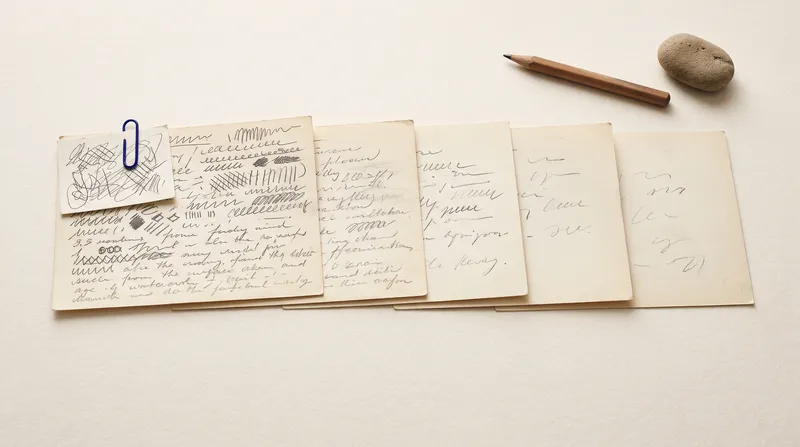
A preprint finds that when AI models repeatedly tidy up expert-written agent instructions with no testing, the instructions get worse. The first knowledge to go is the part the model could not have written itself.
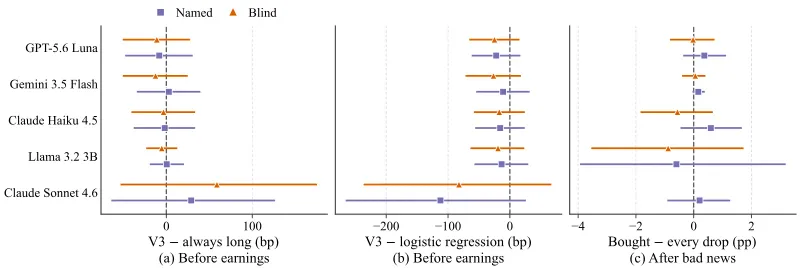
A preprint tested five language models as stock traders around earnings and bad news. None beat a plain rule, and the few gains that appeared came from what the models had seen in training.
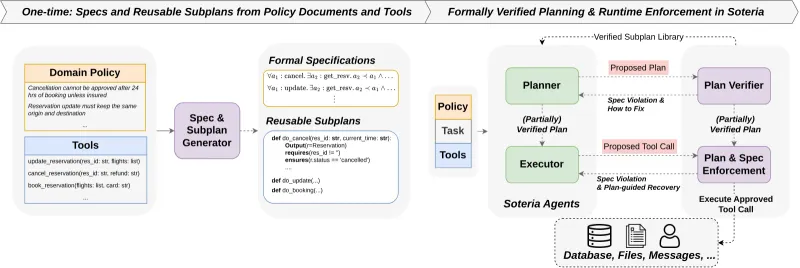
A Princeton and Snowflake team reports an AI agent setup that broke none of its written rules across 207 benchmark tasks. It also finished more tasks than four existing guardrail methods. The work is a preprint and has not been peer reviewed.
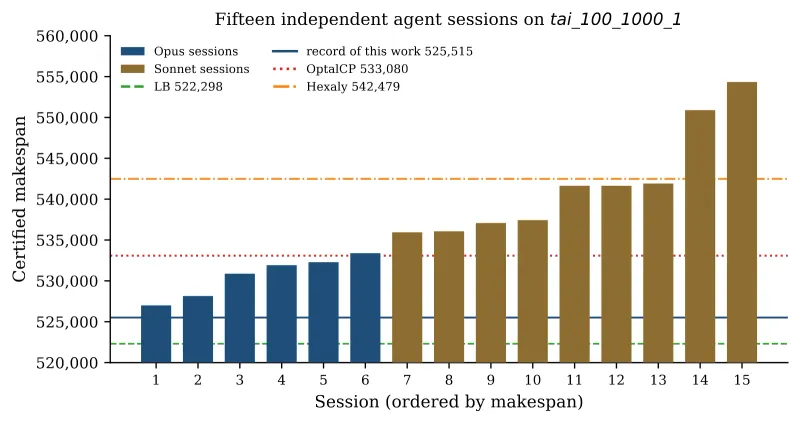
A preprint reports that Claude Code, using only free software, wrote factory-scheduling programs. On the same computer, these came closer to the best possible result than the paid solvers CP Optimizer and Hexaly. The advantage held on large, regular test problems, but not on every problem type.
A preprint tests dozens of AI agents on cancellations and deletions. Whether a search tool lists a second matching record, or only counts it, decides whether most of them stop.
A Cornell-led preprint finds coding agents can write programs that learn from a few labelled images plus many unlabelled ones, sometimes better than expert methods. Choosing the winning program without labels remains the hard part.
Researchers let a coding model rewrite whole memory systems for chat agents. The winners beat published designs on two benchmarks, and one evolved component improved five existing systems when bolted on.
A new preprint tests 22 AI agent set-ups on 64 research-grade biomedical modelling tasks. The best agents match published methods where the original recipe still fits, and pull ahead where the data have been rebuilt.