GPT-6 Astra with zoom tools out-tracks specialist point trackers like AllTracker
A general vision-language model, allowed to zoom in, compare and check its own answer, found the same physical point across video frames more accurately than dedicated trackers. The work is a preprint and has not been peer reviewed.
scienceunderway.com/articles/gpt-6-astra-with-zoom-tools-out-tracks-specialist-point-trackers-like-alltracker

What the study shows
The task is called point tracking: given a spot marked on an object in one video frame, find exactly the same spot in another frame, or say it is hidden. Specialist trackers do this well while a point stays in view. They often lose it when it disappears behind something and comes back.
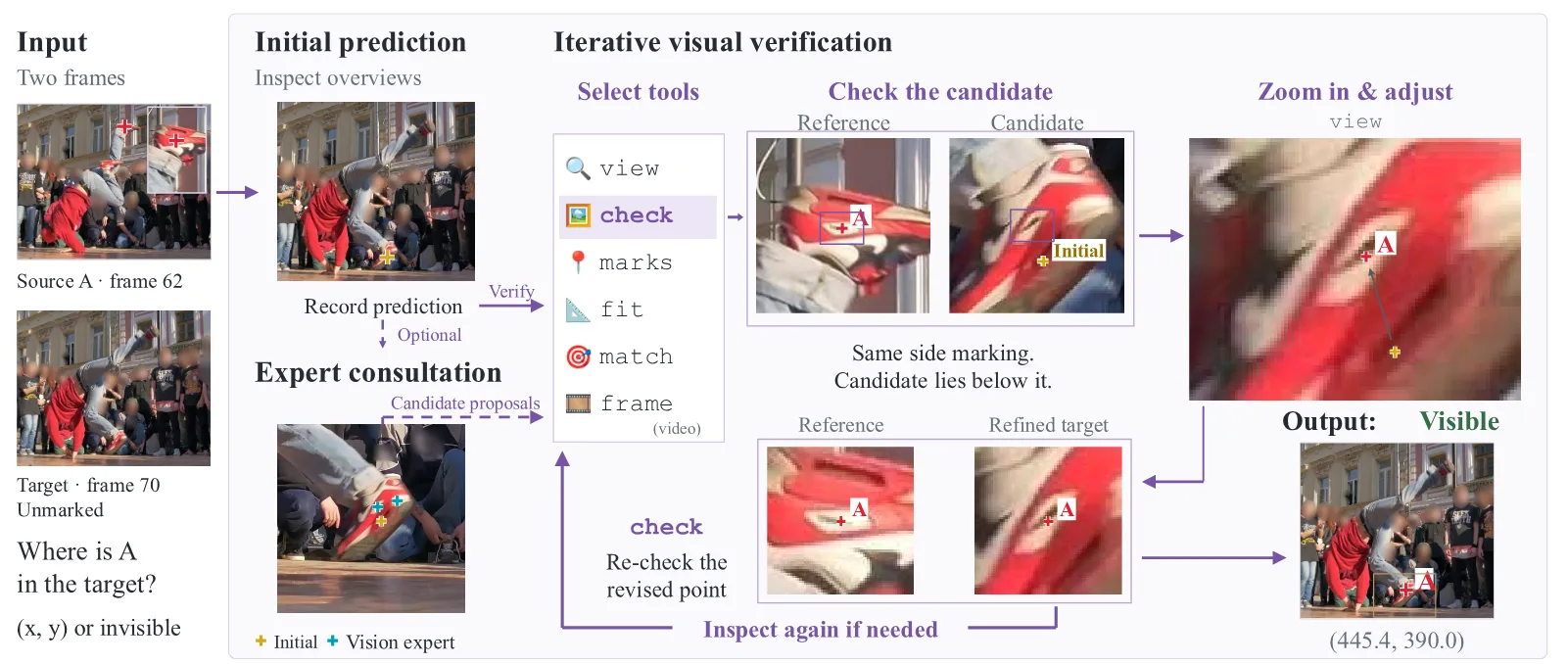
The authors built an agent around a vision-language model (VLM, an AI that reads images and text). The model first makes its own guess. It may then see suggestions from two specialist tools, RoMa v2 and AllTracker. Finally it checks its guess with simple visual tools: zooming in, placing patches side by side, fitting a geometric mapping from landmarks it picks, and looking at in-between frames. It can accept, adjust or reject every suggestion.
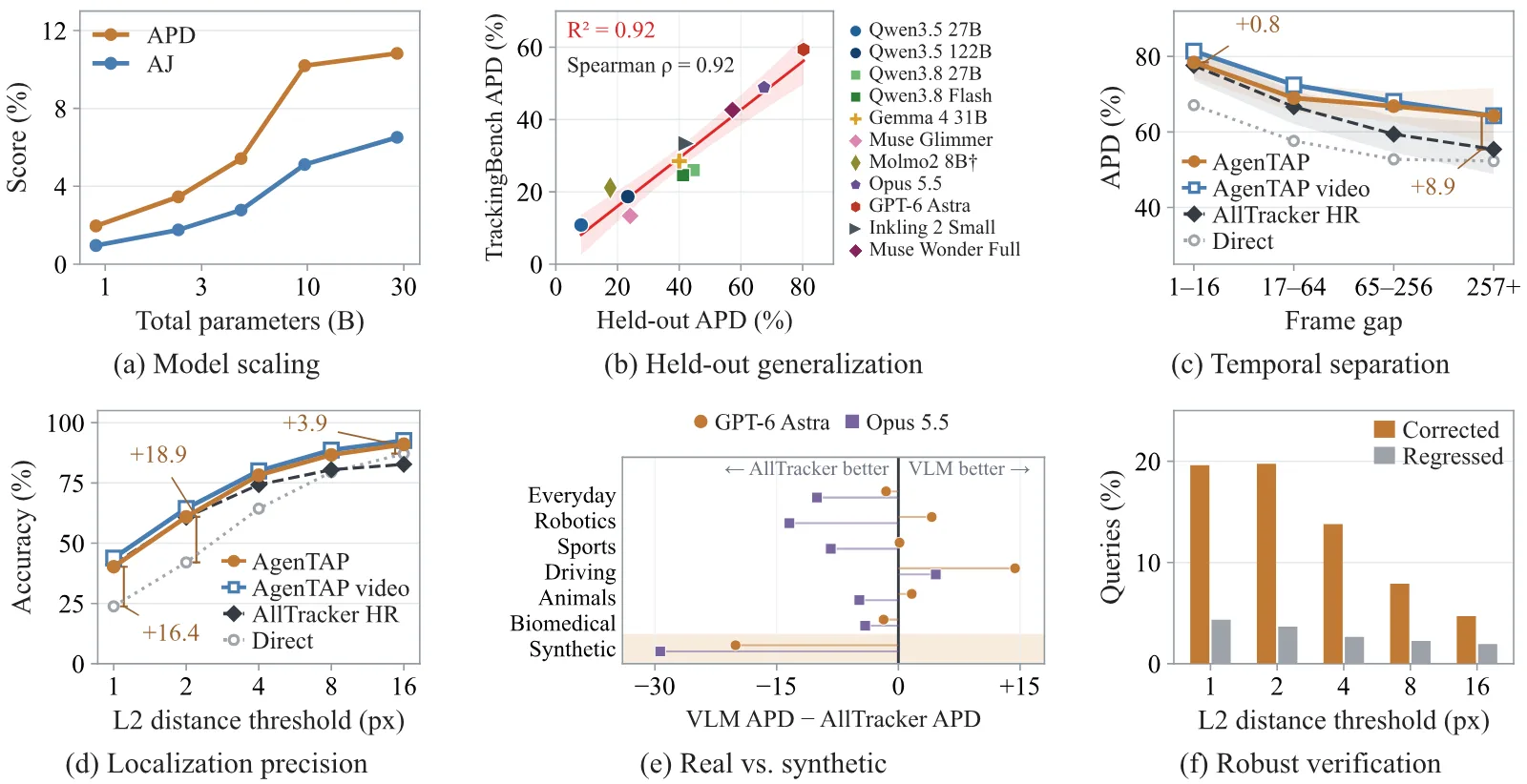
They tested this on 2,000 queries drawn from public point-tracking datasets, covering everyday scenes, robots, sport, driving, animals and surgery. With GPT-6 Astra inside, the agent beat every specialist tracker tested on all four scores, both when given two frames and when given the whole video. Compared with high-resolution AllTracker on two frames, its position accuracy was about a quarter higher.
The tools helped all eight models tried. Most of the gain came in the last few pixels: the share of points GPT-6 Astra placed within one pixel rose from about a quarter to about two fifths. Weaker models gained most, so the gap between a small open-weight model and GPT-6 Astra shrank sharply.
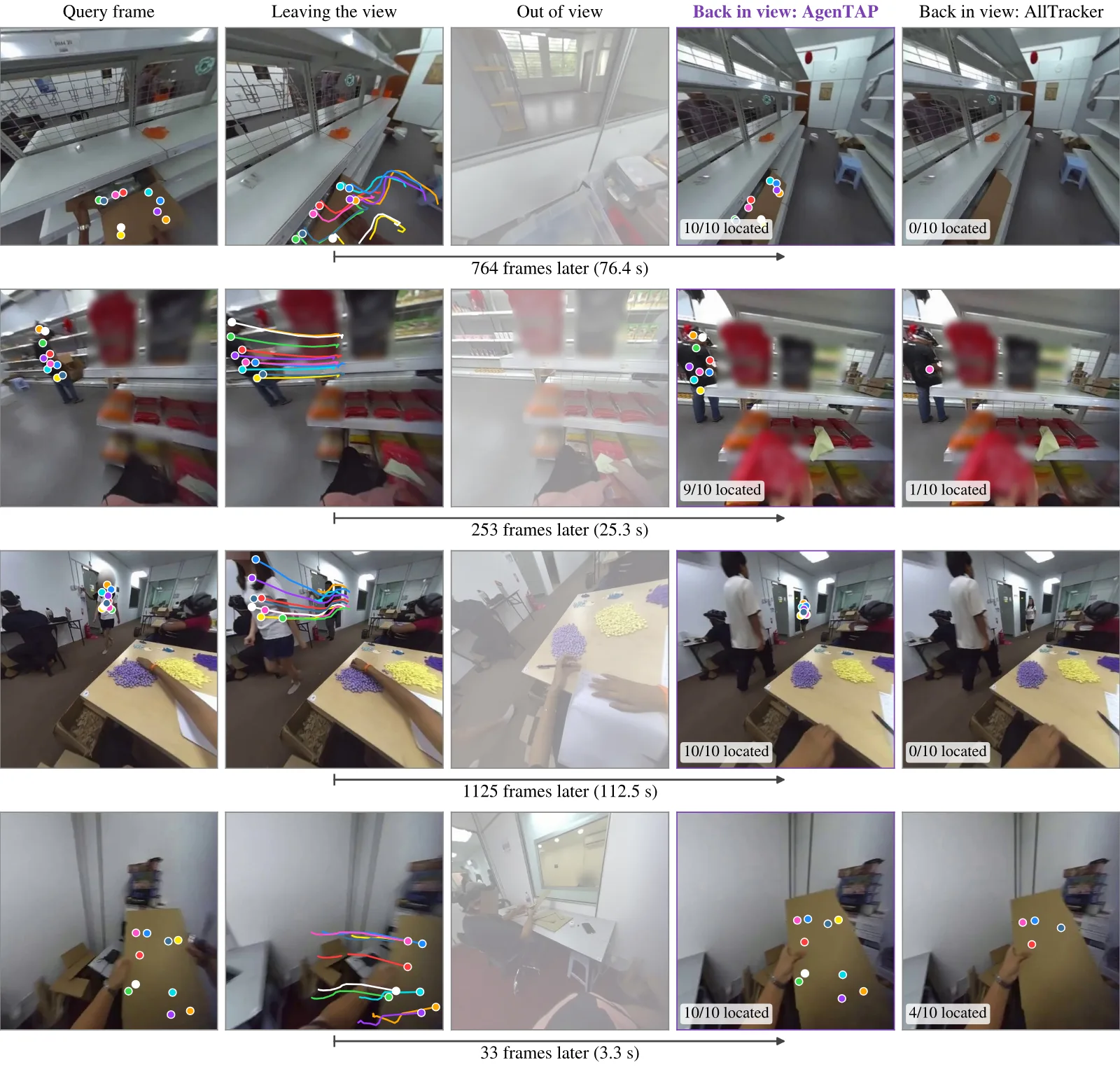
The agent was strongest on points that vanish and return. On long head-camera videos, after objects had been out of view, it scored close to the level at which two human annotators agreed with each other. The best specialist tracker scored about half as well.
The team used the method to build a dataset of 3D point paths over about 297 hours of head-camera video, with clips averaging over three minutes. Adding it to the training of an existing 3D tracker, D4RT, gave a small average improvement on four public 3D benchmarks.
Our reading
In our reading, the interesting part is not that a large model is good at vision. It is that letting the model check its own answer mattered more than the model itself. A fixed routine that simply showed preset close-ups barely helped. Letting the model choose what to inspect produced most of the gain, even with no tracker suggestions at all.
The agent is also more than a referee between trackers. An oracle that always picked the better of the two tracker suggestions scored below GPT-6 Astra working with no suggestions. That points to genuine independent judgement, especially on deciding whether a point is still visible.
On readiness, we rate this level II, Benchmarked. Results are reported on a benchmark built from public datasets and on public 3D benchmarks. The paper shows labels for code and data, but no web addresses we could confirm, so we cannot yet place it at level III.
The rest of this story is for members. Membership is free: read it at scienceunderway.com/articles/gpt-6-astra-with-zoom-tools-out-tracks-specialist-point-trackers-like-alltracker
Read the rest of this story
Membership is free. You get every article in full, and can save stories and follow topics.
We send a sign-in link, no password needed. Already a member? Sign inReadiness assessment
| Level | Status | Evidence |
|---|---|---|
| I Lab only | Met | A working agent and tool set, with full protocols, prompts and example sessions, are described and tested in the lab. |
| II Benchmarked | Met | Results are reported on TrackingBench, built from public point-tracking datasets (TAP-Vid, DriveTrack, RoboTAP and others), against named trackers. The D4RT experiment uses public TAPVid-3D, DexYCB and DROID benchmarks. |
| III Open source | Not yet | The paper shows 'Code', 'TrackingBench' and 'EgoTAP-4D' link labels, but no URL appears in the text. Release cannot be confirmed from the paper. |
| IV In production | Not yet | There is no documented use by a named organisation in production. |
What would move it up
A public release of the AgenTAP tool code, the TrackingBench queries and the EgoTAP-4D dataset at a verifiable URL would meet level III. Documented use by a named organisation, for example in robot learning data pipelines, would be needed for level IV.
The study
Xuweiyi Chen, Jin Yao, Linzhan Mou et al.. Tracking Any Point with Agentic Visual Reasoning. arXiv, 25 November 2026. Read the paper
Notes
- Chen, Yao, Mou, Gong et al. Tracking Any Point with Agentic Visual Reasoning. arXiv preprint, November 2026. University of Virginia, Meta, Princeton University, University of Michigan. Source
- The paper shows link labels for code, TrackingBench and EgoTAP-4D, but no URLs are printed. We could not confirm a public release.
- Headline figures, TrackingBench two-image setting: agent with GPT-6 Astra 54.9 AJ, 71.4 APD, 86.3 OA; high-resolution AllTracker 47.9, 56.6, 70.8. Full video: agent 58.5 AJ, 73.9 APD; high-resolution AllTracker 56.1, 67.9.
- Reappearing points in egocentric video (582 point-frame pairs): agent with GPT-6 Astra 76.9 APD; human agreement 79.3; best specialist tracker 40.1.
- D4RT with EgoTAP-4D: average AJ +2.08, APD3D +2.29, OA +1.31 across ADT, DexYCB, PStudio and DROID.
Edited and signed by
Stefan PerdalFounder. Twenty-five years of building digital products.168 stories editedStefan read the study, set the readiness level and approved this story. An AI system found the paper and wrote the first draft.
How this was made
An AI model read the study and wrote this article in the structure Science Underway uses. An editor reviewed it and approved it for publication. Check the original study before you rely on the details.
How we workNo corrections