GPT-6 Astra solves 43% of robot puzzles from cameras, 86% with simulator
A new simulated benchmark of 90 tight-fit manipulation puzzles finds frontier coding agents can reason out hard motions when they know exactly where parts are and what shape they have. From camera images alone, in one attempt, the best solves fewer than half, and four leading robot policies solve none of the 18 one-arm puzzles they were tried on.
scienceunderway.com/articles/gpt-6-astra-solves-43-of-robot-puzzles-from-cameras-86-with-simulator

 AI illustration
What the study shows
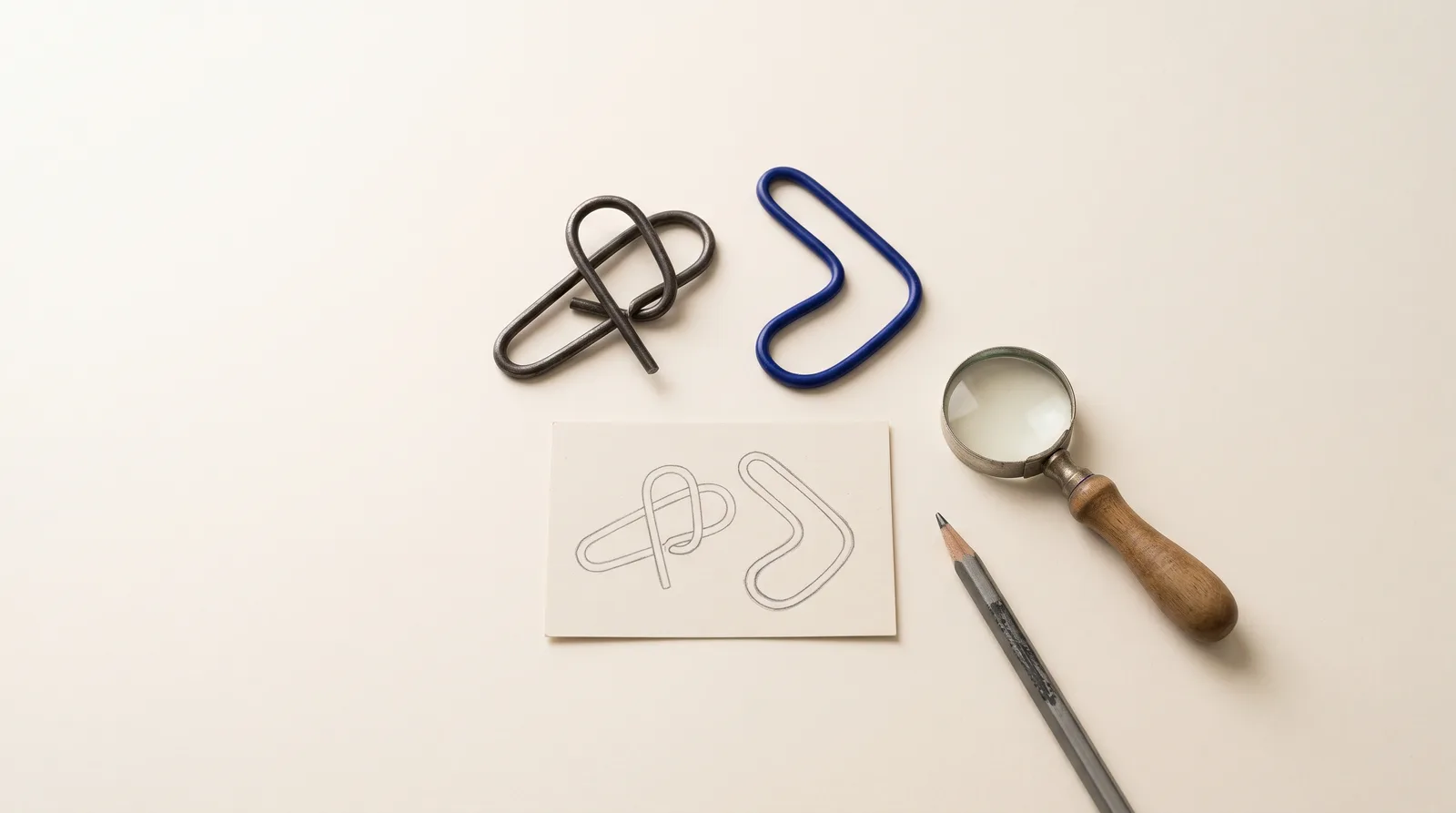
The authors built RoboARC, a benchmark of 90 robot tasks that are hard because of a tight spatial limit. Examples include sliding a part through a gap barely wider than itself, separating hooked metal pieces, untying knots, threading rope and assembling IKEA furniture. The tasks run in MuJoCo, a widely used physics simulator, on three robot set-ups. Every task ships a reference solution and a grader that checks the simulated physics.
Each task comes in two modes. In the Privileged mode an agent reads the full simulator state and can reset and retry as often as it likes before handing in one motion. In the Standard mode it gets only camera images with depth and the robot's own joint readings, with one live attempt and no resets, much as on a real robot.
The authors tested seven coding agents, each a model plus its software harness. These agents write and run their own code to control the robot. GPT-6 Astra in Codex did best, solving about 86% of tasks in Privileged mode and about 43% in Standard mode. The four proprietary agents lost more than half their successes when moved to Standard mode. The three open-weight agents solved at most 7% in Standard mode.
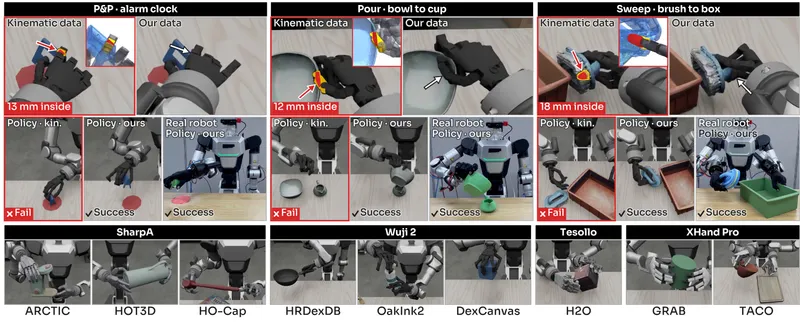
Four public vision-language-action (VLA) policies were also tested without any training on these tasks. VLAs are models that map camera images straight to robot actions. On 18 one-arm puzzles they touched the target object in a third to three fifths of episodes but solved none. GPT-6 Astra solved about 43% of the same puzzles.
To find what the agent was missing, the authors gave GPT-6 Astra back one kind of information at a time on 15 puzzles it had failed in Standard mode. Object positions alone barely helped. Part shapes alone helped more. Both together lifted success from about a quarter to 60%, more than the two gains added up.
Failed runs made little headway. Only 7% got past the halfway stage of a task, and about a third stopped at the key step where the tight constraint must be passed. The paper is a preprint and has not been peer reviewed.
Our reading
In our reading, the most useful result is the split between the two modes. With full knowledge of the scene, the best agents solve most puzzles, often by writing their own motion planners. Without it, success halves. The gap is mostly about seeing the scene well enough, not about reasoning.
The information test sharpens this. The agents' own camera-based position estimates had a median error of about 1.5 mm, and position accuracy did not predict success. Their estimates of a part's size were off by about 14 mm. For a part that must pass a 3 mm gap, that is the difference between a plan that works and one that collides.
On our readiness scale this is level II, Benchmarked. The paper reports results on a defined task set with many named systems. The authors state open licences and promise to release tasks, graders and agent runs, but we could not find a public link in the paper, so level III is not yet met.
The rest of this story is for members. Membership is free: read it at scienceunderway.com/articles/gpt-6-astra-solves-43-of-robot-puzzles-from-cameras-86-with-simulator
Read the rest of this story
Membership is free. You get every article in full, and can save stories and follow topics.
We send a sign-in link, no password needed. Already a member? Sign inReadiness assessment
| Level | Status | Evidence |
|---|---|---|
| I Lab only | Met | The paper describes a working simulated benchmark with 90 tasks, graders and reference solutions, evaluated on 7 coding agents and 4 VLA policies. |
| II Benchmarked | Met | Results are reported on a defined public benchmark task set (RoboARC itself). Many named systems are compared per constraint type and per family, with spread over three seeds, and the classical planner baseline is compared too. |
| III Open source | Not yet | The paper states MIT and CC BY 4.0 licences and links labelled 'Website', 'Code' and 'Agent runs'. No URL appears in the text, and the conclusion says the authors 'will release' tasks, graders, references and runs. We could not confirm that the code is available. |
| IV In production | Not yet | No documented use by a named organisation outside the authors. |
What would move it up
A public repository with the 180 task directories, graders, reference solutions and the Gymnasium package, which can be confirmed and run, would meet level III. Independent groups reporting results on it, or a named lab using it in practice, would be needed for level IV.
The study
Qineng Wang, Jianwen Lyu, Pingyue Zhang et al.. RoboARC: Physical Puzzles for Robotic Manipulation under Spatial Constraints. arXiv, 24 November 2026. Read the paper
Notes
- Wang, Lyu, Zhang et al. RoboARC: Physical Puzzles for Robotic Manipulation under Spatial Constraints. arXiv preprint 2611.33390, November 2026. Not peer reviewed. Source
- The paper refers to a website, code and agent runs, and states MIT (code) and CC BY 4.0 (data) licences, but gives no URL in the text and says the authors will release them. We could not confirm availability.
- Exact figures: GPT-6 Astra 85.6% Privileged, 42.6% Standard (Table 2). Information test on 15 puzzles: 24.4% baseline, 28.9% with poses, 37.8% with geometry, 60.0% with both (Table 13). Position error median 1.5 mm, box error median 13.9 mm (Section H.4).
- Affiliations: Northwestern University, Microsoft, UC Berkeley, Carnegie Mellon University.
Edited and signed by
Stefan PerdalFounder. Twenty-five years of building digital products.168 stories editedStefan read the study, set the readiness level and approved this story. An AI system found the paper and wrote the first draft.
How this was made
An AI model read the study and wrote this article in the structure Science Underway uses. An editor reviewed it and approved it for publication. Check the original study before you rely on the details.
How we workNo corrections