Cached AI answers shown instantly lose blind votes on France's compar:IA arena
The same chatbot answer won about half as many blind votes when it appeared at once instead of streaming. Slow answers won no extra votes, but they cost follow-up questions on compar:IA and in everyday ChatGPT use.
scienceunderway.com/articles/cached-ai-answers-shown-instantly-lose-blind-votes-on-france-s-compar-ia-arena

 AI illustration
What the study shows
The study is a preprint and has not been peer reviewed. It uses three sources of natural variation in public logs, rather than a lab experiment. Its readiness on our scale is I, Lab only: it is a finding about user behaviour, with no released code or tool.
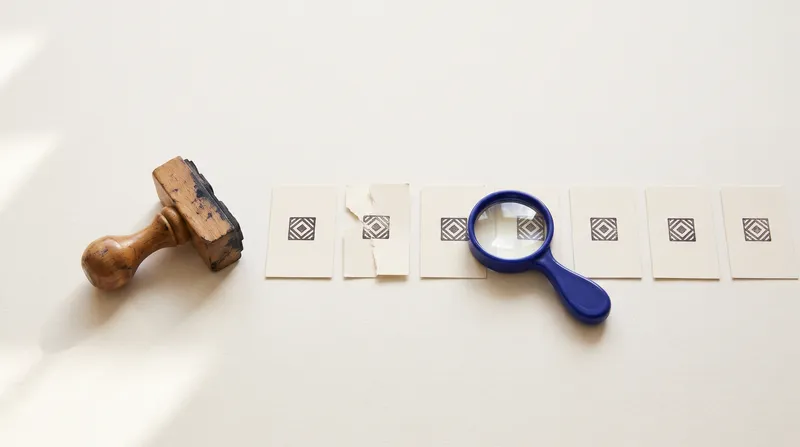
The first source is compar:IA, a public chatbot arena run by the French Ministry of Culture. Visitors put one prompt to two anonymous models and vote for the better answer. From March 2026, when a model had already answered the same opening prompt, a random draw decided what happened. Either the model wrote a fresh answer, streamed word by word as it was produced, or the platform replayed a stored earlier answer from a cache, a store of previous answers kept to save cost. A bug meant replays filled the screen in a fraction of a second, against a median of about four seconds for fresh answers.
The authors report that, comparing answers to the same prompt, a replay cut an answer's chance of winning a decisive vote by about 26 percentage points. A decisive vote is one that picks a winner rather than declaring a tie. For 265 stored texts that were voted on in both forms, the identical words won 57% of decisive votes when streamed and 29% when replayed. Voters more often tagged the replayed version as incomplete, superficial or incorrect.
The second source is congestion. During the study window, a slow model provider could hold up the whole compar:IA server, so identical kinds of answer arrived at different speeds on different days. Across about 324,000 conversations, answers that took longer than usual for their length won no detectable extra votes. But a slower first exchange made visitors less likely to ask a second question: about 1.3 points fewer per doubling of the wait, from a base of about 23%. Most of that loss came in the slowest fifth of conversations.
The third source is WildChat, a public collection of everyday ChatGPT conversations with timestamps for each reply. In about 4.4 million replies, those slowed by congestion made users less likely to send another message. The comparison was limited to models used in the same clock hour.
Our reading
In our reading, the headline result is unusually clean for field data. The draw between replay and fresh answer was random within each prompt, and the identical-text comparison holds the words fixed. The penalty also held when both answers on screen were replays, so it is not only a contrast with a visibly working neighbour. That makes it hard to explain away as differences in content.
The direction matters as much as the size. The arena's own designers expected faster answers to seem more fluent or reliable. The opposite happened, and voters described the instant answer in the language of quality, not speed. A concrete case: a support chatbot that serves common questions from a cache, and shows them instantly, could see its satisfaction scores fall with no change to a single word.
The second finding is quieter but just as useful. A side-by-side vote cannot register a delay that slows both answers. Users still pay for it, by asking fewer follow-up questions. Leaderboards built from blind votes therefore measure something about delivery while missing the cost of waiting.
The rest of this story is for members. Membership is free: read it at scienceunderway.com/articles/cached-ai-answers-shown-instantly-lose-blind-votes-on-france-s-compar-ia-arena
Read the rest of this story
Membership is free. You get every article in full, and can save stories and follow topics.
We send a sign-in link, no password needed. Already a member? Sign inReadiness assessment
| Level | Status | Evidence |
|---|---|---|
| I Lab only | Met | A field analysis of public logs from compar:IA and WildChat, using a natural random draw and congestion-based statistical methods. It is an empirical finding about user behaviour, not a deployable tool. |
| II Benchmarked | Not yet | No public benchmark result applies. The study uses public preference datasets, but it does not report a method scored on a standard benchmark. |
| III Open source | Not yet | The paper does not link the authors' own analysis code. The underlying data are public (compar:IA datasets on Hugging Face under Etalab 2.0, and WildChat-4.8M), but these were released by others. |
| IV In production | Not yet | There is no documented use of the findings by a named organisation. compar:IA changed its server code in October 2026, but the paper does not say this was a response to the study. |
What would move it up
Releasing the analysis code would help. So would a designed experiment, for example on an arena or a commercial assistant, that replays cached answers at a readable pace and reports whether this removes the vote penalty. A named operator adopting such pacing or continuation metrics would be stronger still.
The study
Zihan Chen, Di Zhu, Lei Nico Zheng. Worth the Wait? How Response Time and Streaming Shape Judgments of Generative AI Answers and Chatbot Engagement. arXiv, 24 November 2026. Read the paper
Notes
- Chen, Zhu and Zheng, 'Worth the Wait? How Response Time and Streaming Shape Judgments of Generative AI Answers and Chatbot Engagement', arXiv preprint, 24 November 2026. Not peer reviewed. Source
- compar:IA public datasets (conversations, votes, reactions), Ministère de la Culture, Etalab 2.0 licence. Source
- WildChat-4.8M dataset, Allen Institute for AI. Source
- compar:IA source code, including the cache (pull request #379) and the October 2026 server fix (pull request #795). Source
- Exact figures: replay effect on decisive-vote win share 25.8 points (SE 4.4, 1,005 decisive votes); identical text 56.8% fresh against 29% replayed (difference 27.3, SE 3.7, 265 texts); congestion vote estimate for a doubling of wait, 95% interval -5.4 to +1.4 points; follow-up effect 1.8 points per log unit (SE 0.2), base 23.1%; WildChat IV estimate 1.8 points (SE 0.7), base 39.2%.
- Readiness: level I, Lab only. No public benchmark result, no released analysis code, no documented adoption by a named organisation.
Edited and signed by
Stefan PerdalFounder. Twenty-five years of building digital products.173 stories editedStefan read the study, set the readiness level and approved this story. An AI system found the paper and wrote the first draft.
How this was made
An AI model read the study and wrote this article in the structure Science Underway uses. An editor reviewed it and approved it for publication. Check the original study before you rely on the details.
How we workNo corrections